Privilege – Is it still a Thing?

General Broadcast Warning: This post contains some material unsuitable for people who are not aware of the following: A) I am bisexual; B) I am opinionated; and c) I have a child. Right. Carry on.

Image

No auto-fill was harmed in the making of this screen-capture from today.

I was given this link about Google and what is being termed the ‘Bisexual Problem’ today. I must say, as I was reading it, I was struck by a couple of things.

Firstly, I find it very odd that in a world aiming for an end to discrimination of all groups of people, the black and white lines seem to have been made even more apparent.

It is a fairly constant peeve amongst those of the bisexual orientation that you’re not liked by anyone. So many people misconstrue what it means to be bisexual. The usual misconceptions that I have personally encountered are, as follows:

  1. “You’re not really bi. You just don’t know what you want.”
    Ummmm, no, I’m fairly certain I DO know what I want. I want a nice life, a happy family and someone to love and be loved by. I am just more flexible than most as to where I look for all of that.
  2. 2) “You’re just greedy.”
    Well, this may be true. You put a tub of ice cream in front of me, it’s going to disappear. However, when it comes to who is included in my life, I am very discerning. Even more so when it comes to who I let into my heart. So, no, I don’t think I am greedy.
  3. “You’re just a lesbian in denial.”
    No. Just. No. I am in denial about many things. I deny that I have uni assignments due over the horizon all the time. In the case of my sexuality, I am very certain that I have it right.
  4. “It’s okay. You’re just experimenting.”
    Again, no. I am past my wild, impetuous teens and early twenties. I have experimented and found a formula that works.
  5. “If you’re with a boy one month and a girl the next, your kid is going to grow up with one hell of a complex.”
    Before you ask, yes, I have been told this. I have no doubt they were well-meaning intentions that precipitated this, but I couldn’t help but shake my head. If I stayed with one partner for all eternity and was unhappy, surely that would set a poor example for my kid. If I was changing up my boyfriend (or girlfriend, for that matter) every month, not only would I be concerned about my mental health, but I’d be concerned for my kids. However, I am not one for changing my partner at a whim. I also like to think I keep my kid away from the details of my romantic life until it is at such a point that I feel comfortable in inviting that new person into our home. It’s called discretion and respect for my kid.

So where am I heading with all of this? The stigma held against bisexual people is NOT lowering. It is remaining constant, if not increasing. It is there from straight people and from gay, transgender and transsexual people. It is everywhere. Think about it. An actor comes out as gay, no biggie. An actor comes out as bi, and suddenly everyone has “been with” them and it’s more of a storm than if a straight person simply said, “I kissed a girl and I liked it…”

Secondly, the article struck me as strange for using the term “monosexual privilege” (while citing Shiri Eisner). I was left asking myself is “Privilege even a THING???”

See, to me, we are too busy attempting to come up with rational, NICE (read: vaguely academic) terms for all kinds of bigotry and nastiness. Privilege is just one of those all-encompassing prefixes to otherwise not-so-nice occurrence of life, namely people openly displaying their conscious or sub-conscious prejudices. Male privilege, speaking from a stand point of a male in society unaware of female issues. White middle-class female privilege, speaking from a stand point of a white female with no understanding or awareness of lower-class issues. The list goes on, and you can use for every stand point. If you say anything that might be offensive to one or more groups of people, you are speaking from a stand-point of privilege. It is simply another term for speaking from the situated self.

I guess, with all of this, I am attempting to get people to think about what it is they’re saying before it leaves their mouth. I am asking Google to show the way in actual tolerance and acceptance, by reviewing their embargo on auto-fill of “bisexual” as they said they would. It isn’t a “bug”, it’s prejudice plain and simple. You’re speaking, through your inaction, from a place of “multi-faceted, technological giant corporate” privilege… Oh goodness! Now I’m talking like one of “them”!
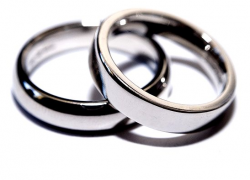
Marriage Equality – Weighing on the argument.

First, a little preface to this mini-rant. A friend is engaged to his boyfriend, and is living in Queensland. For those who do not know Queensland over-turned a rather progressive ruling for Australia when it decided to not allow same-sex couples a civil union (not quite a marriage, but close) but, rather, allow them to register their relationship, and then endangered their right to surrogate assistance. Now, all I have been seeing amid all of this, is the very loud religious overtones shining through. However, I am able to cut through this and see the issue for what it is. I think parties on both sides of the fight need to see this for what it is: A fight for civil rights, not religious ones. I hold my own belief system and sexuality. I do not understand why I should be forced to adhere to another person’s belief teachings or have one relationship model elevated to a higher status than mine simply because it is their model of choice. As a friend commented once:
‘…if you dont [sic] want to love Jesus, then don’t. If you don’t want to marry a man, then don’t! But how can you tell someone else they can’t because you think so?
‘It’s basically like me going up to you and saying “I don’t think it’s right to cross your legs when you sit down, because of the personal beliefs I hold. Therefore, you are not allowed to do it!”‘
I know this is a rather hot topic for some, but please if you comment bear in mind the feelings of others.


ImageMarriage equality is NOT a religious issue. I’m sorry, but it really isn’t. We had an institute of marriage well before the Church came along. Various cultures had their own ideas on what constituted marriage, and allowed people to freely enter into what would have been recognised as a marriage in this day and age. There was little stigma regarding differing approaches to marriage as well, with one type of marriage only being observed for thirteen moons, with the particulars being revisited and discussed amongst the married parties at that point to see if they wanted to continue or dissolve the union.
Going even further back, the ancient Egyptians had secular and sacred marriages, both of which were held in the same level of respect as one another. The secular marriage had a few more legal assurances to both parties (in particular, that the female was assured of leaving the union upon dissolution with exactly what she entered it, plus half of whatever the pair accrued).
The native Americans had their own traditions, different for each tribe.
I could go on to describe each tradition across the world. In all of these cases, though it may have been something of an anomaly, same sex couples were recognised. They held the same level of respected union as opposite-sex couples, were afforded the same level of legal or community assistance, and were not necessarily barred from the union of marriage unless there were other circumstances in the way (children from a previous union, disputes of property ownership, etc).
What we see now is a world-wide community wherein a religious order has become so heavily integrated into the political system that people find it hard to separate one from the other. Our societal compass has become so heavily directed by the moral teachings of one group of people that there is no room in some people’s minds to any other kind of system.
For those who say marriage is a sacred institute, I could not agree more. Marriage is, indeed, a sacred thing. Love is the highest sacred calling we humans have.
Jesus preached love for our fellow man. Not love until it makes us feel strange, not conditional love, but love across the board, without borders and selfless.
In all of native, or nature-worshipping traditions, love for the world and one another was the over-riding premise to morality.
In Islam, love of Allah and one another is what drives morality.
How then, can we see not allowing two people, regardless of their sexuality or displayed gender (because don’t get me started on non-binary gender in this issue), share and commit to love as following our moral compass?


Want to know more about this issue? These are some links for the Marriage Equality argument in Australia. Not in Australia? Please feel free to post your own links in the comments below. On the other side of the argument, please feel free to discuss this issue as well. A well-rounded discussion involves two sides, and I would appreciate your side of the discussion. Do keep things civil though, please.

Australia Marriage Equality

Equal Love

Parliament Information on the Marriage Equality Amendment Bill 2012